
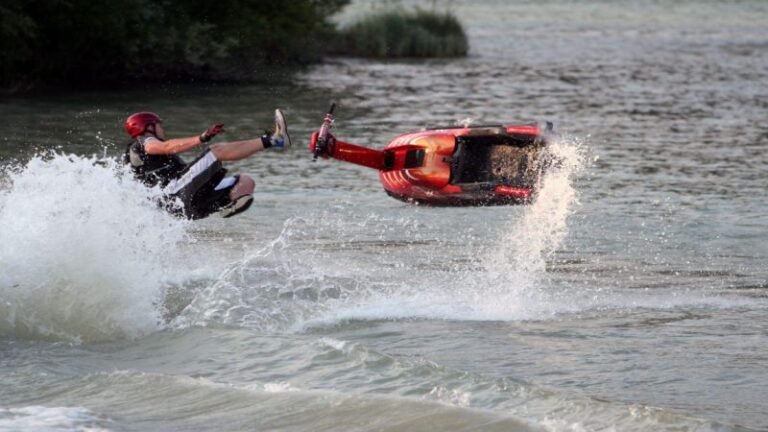
Ask most Americans about watersports, and they’ll probably agree that recreational pursuits like jet skiing are a blast. The numbers tell the story, according to the U.S. Coast Guard and marine registries: More than 1.1 million active personal watercraft are registered nationwide. The jet skis market is a billion-dollar industry and growing, whether you purchase a craft or rent one.
Jet skis can reach up to 60 miles per hour, and supercharged craft can go 70 or more. As thrilling as riding personal watercraft can be, these machines are also powerful and dangerous. Personal injury lawyers like those at Peterson Law Office can come across a variety of jet ski accident cases; some crashes can cause serious injuries. Here’s what you need to know:
Jet Ski vs. Car Accidents: There Are Similarities
Although one “vehicle” is on water and the other on the road, both share some common crash causes. Safety experts point to these six issues that can harm drivers and their passengers on jet skis or in road vehicles:
- Novice operators: Youth and a lack of experience behind the wheel or handlebar
- Excessive velocity: Speeding, aggressive maneuvering or driving recklessly
- Vehicle misalignment: Sudden loss of vehicle or vessel control
- Distracted handling: Inattention and lapses in operational concentration
- Deficient protection: Failing to wear proper safety gear or life jackets
- Impaired driving: Operating under the influence of alcohol or drugs
How Jet Skis Can Lead to Several Severe Injuries
Although jet skis and road vehicles share common crash causes, the driver and/or passenger of a personal watercraft is at a disadvantage. For instance, jet ski riders are completely exposed. These machines on water lack vehicle protection, such as seatbelts, airbags or “crumple zones.” The human body sustains the entire force during a crash.
- High-Velocity Impacts with Hard Surfaces
Jet skis routinely travel at speeds between 40 and some over 70 mph. At these velocities, hitting the water can feel like striking concrete. Riders are also frequently thrown from the watercraft and collide with much harder obstacles, such as other boat hulls or jet skis, fixed structures like docks, piers and rocks or submerged debris or shallow shorelines.
Such high-impact collisions can commonly result in traumatic brain injuries (TBIs), severe facial and skull fractures and shattered bones in the arms and legs.
- Complete Steering Loss “Off-the-Throttle”
A dangerous mechanical vulnerability of many traditional jet skis is that they require throttle thrust to steer. An inexperienced rider might panic and release the “gas” to avoid hitting an obstacle. At this point, the watercraft would lose all steering capabilities. The jet ski would continue hurtling in its original direction at full speed, making high-speed collisions highly common.
- Hydrodynamic Jet Thrust Injuries
One of the most unique and severe jet ski injuries can occur when a passenger falls off the back of the watercraft directly into the propulsion jet’s path. The high-pressure water stream exiting the pump can cause catastrophic internal trauma, severe lacerations and permanent damage to the lower abdomen and pelvic organs.
- Severe Whiplash and Spinal Trauma
The sudden, intense acceleration and tight, rapid turns of a jet ski can create enormous physical jolts. If a rider turns too sharply or hits a large boat wake at a bad angle, the violent motion can snap the head forward or backward, leading to severe whiplash. In worse cases, the force of being violently ejected can compress or fracture the cervical spine, causing permanent paralysis.
- Secondary Drowning Risks
Even if a rider survives the initial mechanical impact of a crash, the danger is not over. High-speed impact with the water frequently knocks victims unconscious or leaves them disoriented. If they are separated from their watercraft, injured or if their life jacket is fitted incorrectly, they face an immediate risk of near-drowning or drowning, which can cause permanent hypoxic brain damage from lack of oxygen.
How A Life-Altering Accident Can Occur: Amputation
Losing a limb in a jet ski accident is catastrophic, and it sometimes happens through specific injury mechanisms.
- Tow Rope and Cable Entanglement
This is one of the most common and devastating ways a limb is severed or irreparably damaged in water sports. A rider falls into the water while being towed (or while assisting with a launch), and long tow ropes or wakeboard cables rapidly wrap around an arm, leg or wrist. If the jet ski operator accelerates or the rope suddenly catches a heavy wake, extreme tension can cause the rope to tighten instantly like a tourniquet and can completely slice through muscle, tissue and bone, causing an immediate traumatic amputation.
- Impeller or Water Propulsion Intake Injuries
Jet skis don’t have external propellers like traditional motorboats, but their enclosed internal impeller generates a water jet. If a rider falls off near the rear of an operating craft, a limb can get sucked directly into the water intake grate where the high-speed, spinning metal blades can violently tear apart flesh and muscle, leaving the tissue so destroyed that surgical salvage is impossible.
- High-Speed Blunt Force Collisions
Jet skis can travel at speeds exceeding 60–70 mph, and they lack physical brakes. When a jet ski collides at high speeds with another watercraft, a dock, or a fixed object, the rider’s body takes the brunt of the kinetic impact. Limbs can be crushed or shattered into multiple pieces, alongside severe vascular damage, severing the primary arteries that supply blood to the limb.
Jet Skis Are Certainly a Thrilling Ride, But…
Jet skiing is exciting, and people of all ages enjoy the watersport, but proper safety measures matter. A personal injury lawyer would advise you to be prepared before heading out on the water: Wear a life jacket, understand right-of-way laws on the water and know how to avoid a head-on jet ski accident. If you are involved in a jet ski accident and feel that negligence played a role, contacting a lawyer is a good first step.