When planning an interior, every design decision contributes to the overall experience of a space. Colors, lighting, furnishings, and materials all work together to create environments that are not only functional but also visually cohesive.
Among the many surfaces available today, porcelain tiles stand out for their ability to adapt to a wide variety of settings and design styles. Their extensive range of finishes, formats, and applications allows them to become an integral part of the design process, helping shape spaces with consistency, personality, and long-lasting appeal.
Creating a cohesive design from room to room
A well-designed home often feels connected, even when each room serves a different purpose. One way to achieve this sense of continuity is through the thoughtful selection of surface materials. Porcelain tiles make it possible to establish a consistent visual language across multiple areas without sacrificing the unique character of each space.
Using the same collection throughout living rooms, kitchens, bathrooms, hallways, and even outdoor areas can create a seamless transition from one environment to another. Large-format tiles, coordinated wall and floor applications, and carefully selected color palettes all contribute to an open, harmonious look that enhances the perception of space.
Rather than treating each room as a separate project, porcelain tiles allow designers to develop a unified concept where every surface contributes to the overall identity of the home.
Expressing every style through material effects
One of the defining strengths of porcelain tiles is their extraordinary aesthetic versatility. Advances in manufacturing technology have made it possible to reproduce the visual richness of natural materials with remarkable realism, offering designers an extensive palette of creative possibilities.
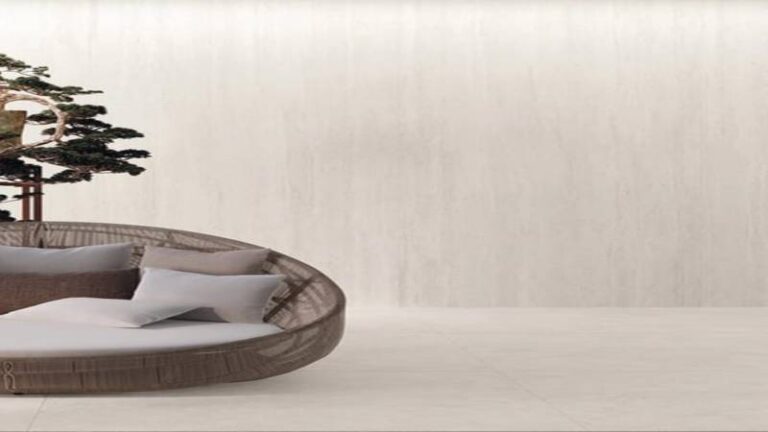
Stone-look porcelain tiles can introduce a sense of authenticity and timeless elegance, while marble-inspired surfaces add sophistication and visual depth. Wood-look finishes bring warmth and natural character without the maintenance requirements associated with real timber, whereas concrete-look porcelain tiles complement minimalist, industrial, and contemporary interiors.
Beyond the material effect itself, a wide selection of colors, textures, surface finishes, and tile sizes enables designers to tailor each project to its intended atmosphere. Whether the goal is to create a welcoming residential setting, a refined hospitality environment, or a modern workspace, porcelain tiles provide the flexibility to support a broad range of design visions.
A solution for residential and commercial interiors alike
The adaptability of porcelain tiles extends beyond private homes. Their combination of design flexibility and reliable performance makes them equally suitable for commercial environments where aesthetics and functionality must work together.
Retail stores, hotels, restaurants, offices, wellness facilities, and public buildings all present different design challenges. Some require surfaces that create an inviting atmosphere, while others prioritize durability in high-traffic areas or demand finishes that reinforce a distinctive brand identity.
This versatility also allows designers to maintain visual consistency across projects of different scales, creating spaces that feel intentional and carefully considered regardless of their function.
Designing spaces that reflect individual vision
Successful interiors are rarely defined by individual elements alone. Instead, they emerge from a thoughtful combination of materials that work together to express a clear design intent and support the way people experience a space over time.
Porcelain tiles have become an important design resource because they offer the freedom to translate different aesthetic ideas into coherent, functional environments. Rather than limiting creativity, they provide a flexible foundation on which a wide variety of styles can be built, interpreted, and refined.
As design preferences continue to evolve, this ability to combine visual diversity with practical performance ensures that porcelain tiles remain a valuable choice for creating spaces with character, balance, and lasting identity.
Ceramiche Keope: a design partner for contemporary architecture
Architecture today demands materials that combine technical reliability with versatility. Since 1995, Ceramiche Keope has answered this need by developing porcelain stoneware collections that support architects and designers in creating coherent, high-quality spaces.
As part of the Concorde Group, the company combines Italian manufacturing expertise with continuous investment in research and production technologies, offering solutions conceived for residential, commercial, and public environments where aesthetics and performance go hand in hand.
This commitment is expressed through porcelain stoneware, the material at the heart of every collection. Manufactured from selected natural raw materials and fired at high temperatures, it delivers exceptional compactness, very low water absorption, and outstanding resistance to wear, mechanical loads, chemicals, and changing environmental conditions. These characteristics make it a dependable choice for projects that require long-lasting performance without compromising on visual appeal.
To meet the needs of contemporary architecture, Ceramiche Keope has developed an extensive portfolio of collections available in a wide range of sizes, thicknesses, and aesthetic solutions. Large slabs reinforce spatial continuity, while smaller formats provide flexibility for detailed layouts, wall applications, and decorative compositions.
The same attention to design extends to the company’s surface finishes. ULTRAsilky stands out for its extra-smooth, velvety satin texture, combining refined elegance with enhanced slip resistance for interior wet areas. ULTRAmatt, on the other hand, offers a deeper, extra-matt appearance with a soft, uniform feel, simplifying everyday maintenance in both residential and commercial settings.
Responsible manufacturing is an integral part of Ceramiche Keope’s industrial philosophy. Production is based on a closed-cycle system that enables the complete reuse of process water, the recovery of fired ceramic waste, and the reintegration of raw material residues. Approximately 75% of the energy required during manufacturing is generated internally, while the remaining share is supplied exclusively through certified renewable energy sources.
Internationally recognized certifications confirm the effectiveness of this approach, including ISO 17889, WELL Building Standard V2, and Declare, which recognize responsible production practices and transparency throughout the manufacturing process. By combining technological expertise, environmental responsibility, and design culture, Ceramiche Keope continues to develop porcelain stoneware solutions for contemporary architecture, balancing quality, durability, and lasting aesthetic value. See more.