
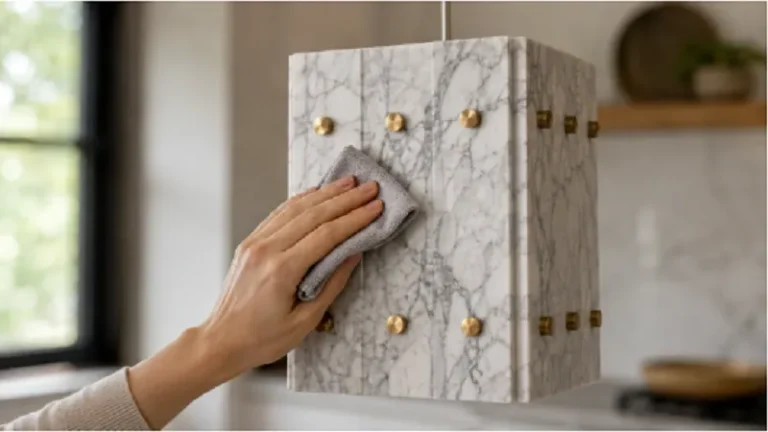
Marble lighting brings more than illumination into a room. Its natural veining, subtle color variation, and stone texture make the fixture part of the interior even when the light is turned off.
That natural beauty also means marble should be cleaned more carefully than ordinary glass or metal. The best routine is usually simple: remove dust regularly, use very little moisture, avoid acidic cleaners, and protect the stone from unnecessary abrasion.
1. Start With Dry Dusting
Dust is often the first thing that makes a marble fixture look dull. Even a light layer can reduce the contrast of the natural veining and make polished stone appear flatter.
Turn the fixture off, allow it to cool completely, and gently remove dust with a clean microfiber cloth or soft duster.
Quick care tip: Regular light dusting is safer than allowing buildup to become heavy enough to require stronger cleaning later.
2. Use Very Little Water

Fingerprints and light surface marks usually do not require heavy cleaning. A soft cloth slightly dampened with clean water is often enough.
Avoid soaking the marble or spraying liquid directly onto the fixture. After wiping, use a second clean cloth to dry the surface and prevent moisture from collecting around metal joints or electrical parts.
- Use only a lightly damp cloth.
- Never spray cleaner directly onto the fixture.
- Dry the stone immediately after wiping.
3. Protect the Natural Marble Surface
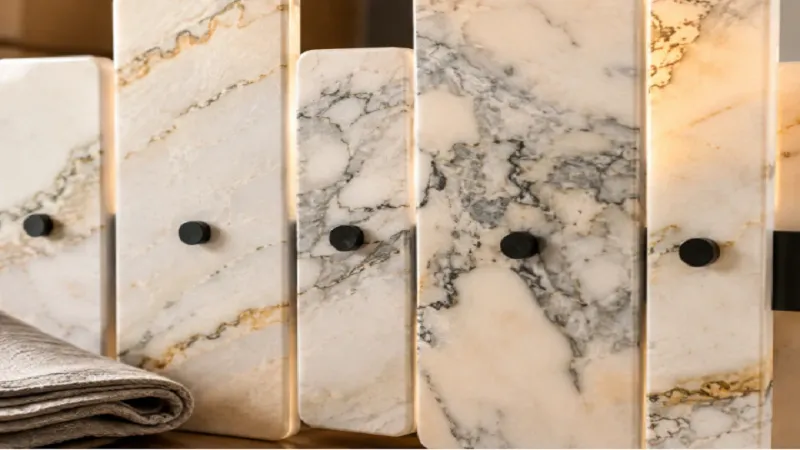
Marble can be sensitive to acidic and abrasive products. Vinegar, lemon-based cleaners, rough pads, and strong chemical degreasers may dull or etch the stone.
Natural veining, cloudy mineral patterns, and tonal variation are part of the material itself. They are not stains that need to be scrubbed away.
Simple rule: if a cleaner is designed to scrub, dissolve, or aggressively degrease a surface, it is usually too strong for routine marble care.
4. Keep Metal and Electrical Parts Dry

Marble lighting often combines natural stone with metal frames, suspension rods, chains, canopies, and electrical components.
Clean metal parts separately with a dry or lightly damp soft cloth, and avoid letting metal cleaner come into contact with the marble unless it is confirmed safe for natural stone.
Moisture should never collect around sockets, wiring, LED components, or electrical connections.
Do Bulb Type and Heat Matter?
Yes. Long-term care is not only about cleaning. Using the recommended bulb type and wattage can help prevent unnecessary heat around the stone, metal finishes, and electrical components.
If the fixture is designed for LED or specifies a particular bulb, follow that recommendation instead of installing a higher-output alternative simply to increase brightness.
How Often Should Marble Lighting Be Cleaned?
- Light dusting: every few weeks.
- Gentle surface cleaning: whenever fingerprints or visible marks appear.
- Hardware inspection: several times a year.
- Professional help: for difficult-to-reach or especially heavy fixtures.
Marble fixtures installed near kitchens may need more frequent attention because airborne grease can settle on the stone and metal more quickly.
Gentle Care Helps Natural Stone Age Better
Marble lighting does not need constant polishing. In fact, the safest maintenance routine is usually the least aggressive one: remove dust, use minimal moisture, avoid acidic products, and preserve the natural character of the stone.
If you are comparing chandeliers, pendants, and wall sconces made with natural stone, explore Houlte’s marble lighting collection to see how marble is used across different lighting styles and residential spaces.
With marble, good maintenance is less about making the surface look perfectly uniform and more about protecting the natural pattern, finish, and character that make each piece different.
See More: SosoActive