
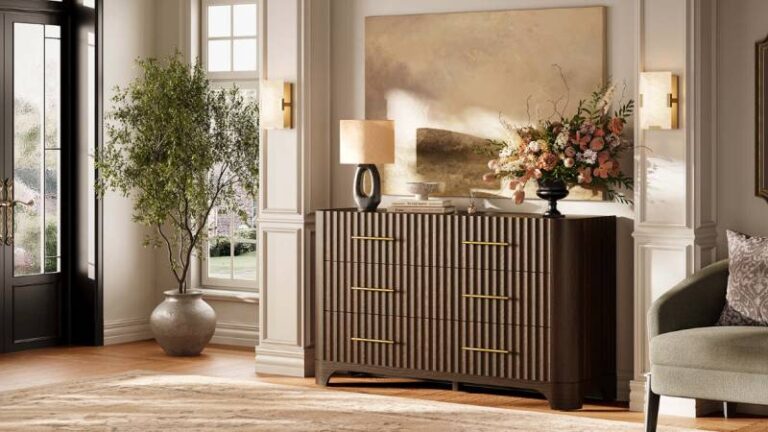
Let Each Area Have a Clear Purpose
Open-concept homes are loved for their light, space, and easy flow. The kitchen connects to the dining area, the dining area opens toward the living room, and daily life feels less divided by walls. But without clear boundaries, an open layout can also start to feel visually messy.
The goal is not to fill every empty corner. It is to give each area a purpose. A dining zone should feel like a place to gather. A living area should feel relaxed and grounded. An entry or transition area should help the home feel organized from the start.
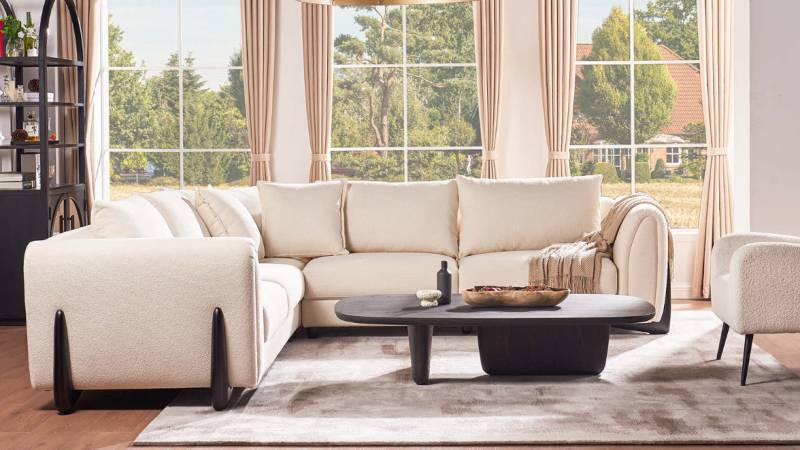
Use the Dining Table as an Anchor
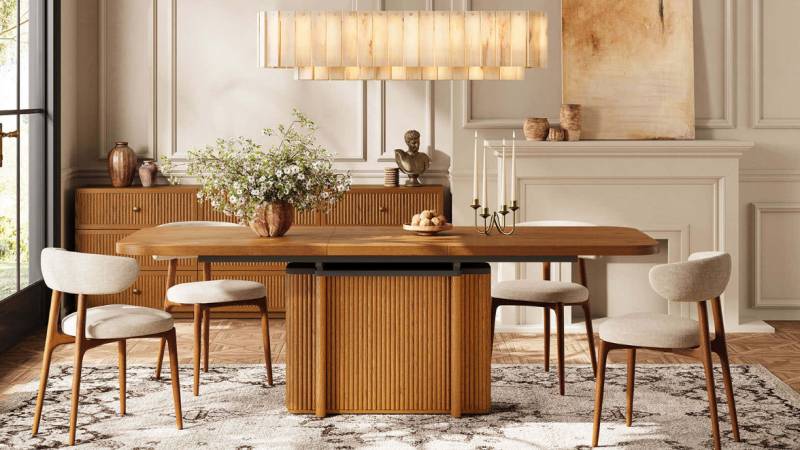
In many open-concept homes, the dining table becomes the most important anchor between the kitchen and living room. A table that is too small can disappear in the space, while one that is too large can block movement.
For a long or wide layout, a rectangular dining table can create structure and define the dining zone clearly. For a smaller open corner, a round table can soften traffic flow and make the space feel more conversational.
If you are choosing a table for an open dining area, a guide to dining tables for open-concept homes can help you think through scale, shape, and materials before deciding.
Create Soft Boundaries Without Walls
A rug is one of the easiest ways to separate zones without making the home feel divided. Placing a rug under the dining table can make the eating area feel more intentional, while a second rug in the living area can create a separate sense of comfort.
Lighting can do the same thing from above. A pendant or chandelier over the dining table creates a ceiling-level boundary, while floor lamps and table lamps help the living room feel warmer and more relaxed.
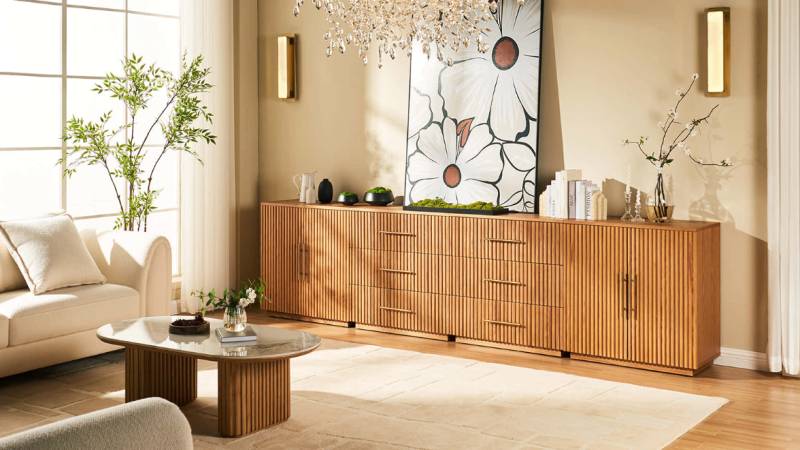
Keep Storage Quiet and Practical
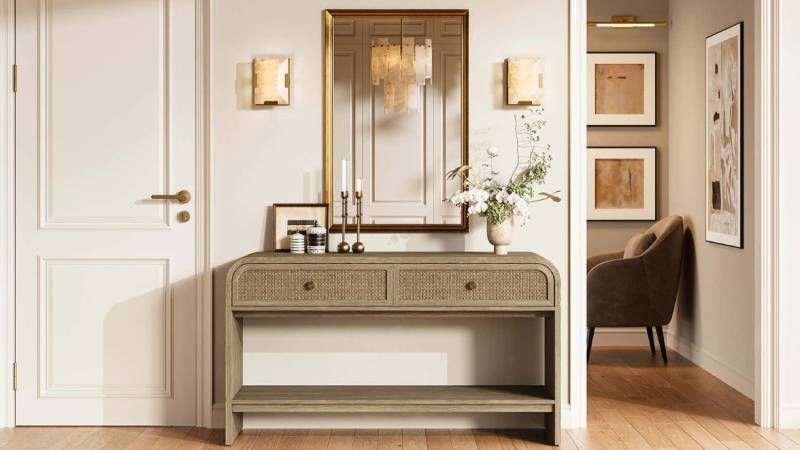
Open layouts reveal everything at once, so clutter becomes more noticeable. Choose furniture that supports daily routines without adding visual noise. A console table near the entry, closed storage for small items, and clean surfaces can help the entire space feel calmer.
Repeat Materials for a Cohesive Look
To keep an open-concept home from feeling cluttered, repeat materials across the room. Warm wood, soft neutrals, black metal, stone surfaces, or woven textures can appear in more than one area. These repeated details help the kitchen, dining area, and living room feel connected.
An open-concept home should feel spacious, not unfinished. With the right table, rug, lighting, and storage, each zone can feel defined while still belonging to one cohesive home.
See more: sosoactive.net.